Thursday, October 13, 2011

Bart Vs. Thanksgiving

Well we've finally reached the point where we've become bored with everything else and have returned to doing this dumb blog. It's been about 3 months since the last review so we're sorry if this one is a bit lackluster. Also please note the grade on the top is the one who reviewed the episode.

Bart Vs. Thanksgiving is one of the episodes which could be a perfect embodiment of season 2 if a few aspects of the episode were done better. But the episode is superb blend of emotion, good gags, some satire and a beautifully portrayed family around the holiday season. If anything this episode is the best example of how the show in its early days could portray a family perfectly. This family could be any one's family. The first act in particular does a great job of realistically portraying the family. With the young kids attempting to help with dinner, Homer just watching TV with the kids(including a meta reference to the shows popularity) while Marge is slaving away in the kitchen and the kids fighting over glue. The arrival of the grandparents and Patty and Selma provide much of the comedic points of the episode(along with some great lines by Homer). Even just Patty and Selma bringing food to the dinner is a realistic point because we all have those relatives who insist on bringing food even when told not to . So the family settles down to enjoy a dinner and that is when the conflict arises. Lisa makes a centerpiece for the dinner which has many women of America who don't get recognition like they should and Bart instead of waiting for room to free up on the table just pushes the centerpiece into the fire. It goes up in flames and Lisa runs to her room. Marge tells Bart he has ruined Thanksgiving and he runs up to his room.

Where the last two acts of the episode go are what separates season 2 from it's peers in the later portion of the classic era. It's able to rely on its relatability and realistic characterizations. It doesn't have to stretch the characterizations out to prove it's point. The kids don't act any older than they are. Bart in particular is at his best. He is completely in shock that he is being punished as he doesn't see the problem with his actions. He can't see his selfishness or how he made his sister so upset. So he decides to run away. Meanwhile like normal everyone forgets about Lisa because Bart goes missing. Lisa writes a poem (which is a great homage to Howl) to showcase her feelings about the situation. Bart after not successful in stealing food from Mr. Burns decides to give blood and in doing so passes out in the gutter as the second act ends.

The last act of this episode is where most of the problems come out. Well not so much with the scenes in the soup kitchen those are great pieces of satire . Some later episodes even tried to copy the scenes(see season 9's Miracle on Evergreen Terrace) but just couldn't do it with such poignancy. Hell the problems aren't even in the second part of the third act with Bart coming home. His coming home scene is actually a great piece of animation. But the most poignant moment of the episode is of course with Bart and Lisa on the roof. Bart sees the error of his ways and apologizes. My problem with all this is just how rushed it all feels. I mean look at the previous acts everything is paced so nicely. It's somewhat slow but that is so they could develop proper characterizations. The episode almost feels cinematic the way every character interacts and how the story is plotted. But the ending is pretty slapdash. That doesn't mean of course it's bad but they could have done so much more with it.

As with most episodes George Meyer writes, the episode is packed densely with social commentary and satire. What makes his writing so great is how subtle the commentary whether it's just in the fact that Homer sits around watching TV while Marge works, Maggie is left alone with the TV or in a more in your face way with Kent Brockman's reporting sequence at the soup kitchen(one of the best in the entire series). You also get the whole Thanksgiving satire with Bart coming in and destroying Lisa's centerpiece despite the fact her piece was on the table first. Then of course there is the comment of the rich wasting foods with Mr. Burns etc. But while the episode is satirical it isn't heavy handed like some of his other episodes(Mr. Lisa Goes to Washington). Also with Meyer's episodes like I said above you get such realistic character portrayals. Every character is in top form and you really get a sense that he knows what The Simpsons are about. He truly understands the show. But you also get these weird dialogues from small side characters such Bill and Marty's back and forth during the parade. It's amazing

I do think this episode may be the best Bart Vs. Lisa episode as neither of them have to act out of character to progress the episode. If you compare this episode to season 9's Girly Edition ,season 8's My Sister, My Sitter or season 6's Lisa on Ice you'd wonder if you were watching a different show. Both those episode utilize the later seasons need to stretch characters for foil purposes or they have to act out of their age tier. While in this episode Bart and Lisa are real kids and the episode's conflict doesn't push one character to the brink of insanity which became a norm in later Bart and Lisa episodes.

Man I started to ramble oh well. It sucks to give this episode lower than an A grade but again it laughs the huge laughs other season 2 episodes have and the ending is weaker than most.

Darren's Grade: A-
Warren's Grade: B+

Favourite line: Of course, a stadium is much too big for flash pictures to work, but nobody seems to care!

Friday, July 15, 2011

Dead Putting Society

This is an episode of firsts. The first episode written by Jeff Martin, the first full fledged Flanders family story and the first real interactions between Ned and Lovejoy. It may be a bit cliche in terms of its plot but there are many factors that pull the episode up from being terrible.

The Ned and Homer dynamic is one of my favorites in the show and this episode really sets the bar for dynamic. Ned is probably the perfect foil to Homer. Ned is everything Homer wishes he could be he is financially more successful, his kids respect him etc. Ned is the ideal man in the world while Homer is the average man. As was apparent in "Call of the Simpsons" Homer is obviously jealous of the Flanders financial success so he always tries to reach the heights Ned can but he is merely average so you know he never will be able to. Homer not obviously as attached to being extremely nice to Ned constantly berates Ned at every chance. He constantly takes advantage of his niceness and is often able to get a response no one else can out of Ned. He is actually able to get Ned mad at him and sink down to his lows i.e the bet on Todd and Bart's game, infinity plus one joke and kicking Homer out of his house. Ned of course immediately after he does these things feels remorse for his actions. Where most people would just keep going Ned writes an apology letter to Homer for kicking him out the house leading to one of the best jokes in the classic era "bosom." He questions himself when he makes the bet with Homer "good gravy what have I done." Also the son who doesn't win line. While Homer being the average man just thinks of the next way he can get Ned whether its "helping" Bart with his putting or just mouthing him off. Flanders I would say could be compared to Frank Grimes as he exposes the flaws in Homer of course Ned's exposing of the flaws is far more subtle and for that I think it works far better.

Season 2 is the king of character driven gags and stories intertwining. This is apparent in Lisa's character in Dead Putting. She agrees to help Bart practice his putting. She of course does a much better job of it than Homer does because she appeals to Bart's inner self rather than just forcing him to do useless things i.e naming the putter, looking at the picture of Todd etc. It's also pretty telling of Bart's character of how he doesn't want to disappoint his father but he knows he isn't that much of an achiever. But he gets the help of Lisa and is able to succeed despite Homer's constant way of trying to act Bart like a "real" athlete i.e the breakfast scene before the tournament. But Lisa really shines in this episode as a somewhat bitter 8 year old. She is apathetic towards her father because he doesn't care about her activities. In Lisa's eyes this is a good and a bad thing because being as smart as she is able to function on her yet she still is a 8 year old girl who craves her fathers attention. Lisa and Bart are just as good foils to each other as Homer and Ned in this episode. Lisa is the intellectual and Bart is the savvy street smart kid. But neither can really function without the other one. They both thrive when they help each other. Bart because he gains his fathers love and Lisa gets to help her brother and gain his trust. The best scene displaying the Bart/Lisa dynamic is of course the sound of one hand clapping scene.

There are a couple detractors to this episode of course. The end of the tournament is anti climatic and pretty boring. It's really disappointing too because the tournament is one of the funniest scenes in the episode with Homer and Ned's interactions and of course the announcers. But the end with Todd and Bart calling it a draw for the sake of pressure is just boring. Of course it was meant to end that way so you could chalk up one more moment to the Homer and Ned dynamic. They both have to mow each others lawn's in drag and Homer is of course embarrassed while Ned revels in the crowd watching him acting silly. The plot is also very sitcom cliche. But that's another thing that made season 2 amazing is that it is able to take boring sitcom plots and make them entertaining. I mean most season 2 episodes are out of this world in terms of plotting but a few Dead Putting/Bart's Dog etc all have terrible plots but are able to pull them off quite well. Lastly there are some people would call Homer jerk or that he has terrible characterization in this episode. but in fact it is the opposite it is everything Homer should be. He's just simply jealous something the average man is almost daily. He jealous that Ned's kids are respectful, that Ned's wife basically serves him while Marge doesn't for Homer and just that everyone like Ned more. Compare this to season 6's Lisa on Ice where Homer actually has no real reason to be a overboard sports parent other than for satirical value and I'm not fond of changing a character for one episode purposes. In this episode he just sees this mini golf tournament as his way to be better than Ned.

Grade: B+

Tuesday, July 12, 2011

Dancin' Homer

So we finally reached season 2's first non A-/A episode. It's actually one of a very few episodes I would call boring in the classic era. It's not boring in the fact that it doesn't have many gag(it doesn't really) but the plot moves a slow pace for no reason. There is nothing added to any characters by the episode movie slowly i.e Bart vs. Thanksgiving. The episode though does have some high points and was written by Ken Levine and David Isaacs.

The plot starts where many Simpson's episodes would start at Moe's. But this trip to Moe's isn't one Homer enjoys because everyone just wants to hear his fall from grace or how Homer puts it "how he became a loser". He eventually gives in and tells his tale. So the SNPP employees and their families are given tickets to see the towns minor league team play. The team is of course terrible to match the typical Springfield aspect. The team is filled up with young up and comers and a few older players particularly Flash Baylor who provides a decent gag by hitting on Marge for an autograph for Bart. There a re a few decent gags before the start of the game i.e Homer on the jumbo tron and Burns throwing the ball. But Bleeding Gums singing the anthem is a failed gag and one of the worst of the classic era in my books. Burns is forced to sit with the employees to prove he is indeed their friend. Of course he is seated beside Homer which to Homer means he won't be able to get rowdy and drink lots of beer. But to his amazement Burns wants to drink with him. The gags here seem a bit off with Burns drinking with Homer and yelling at players but I did laugh at them. The Isotopes are about to lose their 27th game in a row but they have the bases loaded in this game in the bottom of the 9th. So Homer musters up the courage and begins to dance to pump up the crowd and the players to every one's amazement it works and the Isotopes win. Burns is of course disgusted with Homer's behaviour and it earns him a banned for life from all SNPP related activities. The astonishing thing about this is this the end of the first act and it's something like 9/10 minutes long. That's crazy because it leaves so little room for plot development and it really shows in the next two acts.

So Homer's career being a mascot begins. It's a pretty bland 5 minutes of a second act. It's a quick flash montage of Homer dancing to a reggae beat in one of the games. Homer is of course an enormous hit and becomes more famous than The Isotopes. Homer even gets put on a t-shirt and a nice self referential jokes is made. But Homer just as he is becoming the biggest thing is called up to be a mascot for Capital City. It's a tough decision for Homer but the kids and Marge agree to go to please Homer(mostly at Marge's approval). Lisa says something that has always stuck with me despite this episodes lack of real punch in "we're too small for Capital City....."everyone here has forgiven us. It is really telling about The Simpsons and status quo in Springfield and how everyone just puts up with their antics because they're Springfieldian. So Bart says his good bye to Milhouse and Flanders comes to say his good byes and cries. Overall it's pretty cornball stuff. But the act ends on a decent not of Homer saying good bye to the fans a la Pride of the Yankees.

The family then heads to the city and these brief scenes are what I think are the top of this episode. The lighting as they enter the city is particularly nice and creates a really nice atmosphere. The Simpsons are entranced by everything they see in the city street crime, duff brewery etc. So it's time for Homer's big day he is a mascot at a big league game. He meets the Capital city Goofball who is a decent guest star. The kids and Marge get their free seats which they assumed would be close to the field but are in fact at the very top of the stadium. Homer is too nervous to even concentrate on the game and when it is finally his chance to replace the Goofball he shines. Well he thought he would. He says he danced better than he ever had and everything but the crowd has no reaction. The crowd in a hilarious snobbish way dismiss Homer as being from the sticks and not ready for the big leagues. Homer is of course devastated to be fired and thinks the family will be upset with him but the family is able to put their feelings behind them about the sudden moves and able to cheer Homer up. I think this is where the episode should've ended but they decided to have one last wrap around at Moe's and it is decent but I preferred to end it on a bitter sweet ending of the ball park.

The problems I have with this episode are almost what I have wrong with lots of episodes in the post classic era. This episode's flaws of course aren't as drastic as the post classic era's are but regardless the episode seems terrible compared to the brilliance of season 2. The wraparounds are a terrible idea and just seem like useless filler. None of them add anything or bring anything funny to the episode like THOH wraparounds do. The plot moves at way to slow of a pace to be good. I have no problem with episodes being of a slow pace indeed most of season 2 is but this one was slow and had no benefits for it being slow. There is no character development and is just a silly Homer gets a job episode(one the worst ones of the classic era). While none of the characters are out of character except maybe Burns but that was for the sake of trying to act friendly. There is nothing added to them and nothing said about them. You never feel anything for Homer. You don't feel happy when he succeeds or sad when he fails and I think you can credit that to the first act taking the majority of the time without leading to any build up.

Grade:C+

Friday, July 8, 2011

Two Cars in Every Garage Three Eyes on Every Fish

Season 2 continues on its roll with the political satire masterpiece Two Cars in Every Garage Three eyes on Every Fish. It was actually made to be the season premier but Bartmania was in full swing so they went with Bart Gets an F instead. The episode was written by Swartzwelder and Simon and you can really tell because Swartzwelder was the best at writing satirical pieces maybe because of his Libertarian background the characters don't take on the zany aspects they do in most of his episodes. The characterizations particularly of Burns is beautiful and so intertwined with the character of Charles Foster Kane a la Citizen Kane that it's obvious Simon had a lot to do with this episode as he was the force behind making the characters far more three dimensional.

The episode starts off innocently enough with Bart and Lisa fishing in the river. They are soon greeted by reporter Dave Shutton and Bart says his infamous line while introducing himself to Shutton. "I'm Bart Simpson who the hell are you?". There is some nice back and forth dialogue between the kids and Shutton before Bart catches a fish. The fish they catch is Blinky the three eyed fish. A fish that would become famous just as much in our world as the Simpsons world. Blink still currently referenced by environmentalists and politicians. Blinky of course gets his third eye from SNPP's waste being dumped into the river and Shutton soon runs this story and SNPP is given a inspection by a committee. The plant along with dumping waste is in really poor shape. Many of the things wrong with the plant are humorous i.e gum in cracks and Homer sleeping on the job. Burns after failing the review tries to bribe the committee. The bribe fails and Burns learns that it will cost 56 million dollars to fix the plant. Burns begins to heavily drink and sings a heartbreaking version of Brother Can You Spare a Dime. Burns tossing the bottle aside wakes up Homer who was still sleeping and Homer rushes to go home. But he sees a distraught Burns and decides to talk to him. Homer gets into Burn's car with him and the two of them have a talk. Burns declares him and Homer are a dying breed Burns of course thinks Hoemr has stayed late to work. Homer convinces Burns to run for governor and the act ends of a great gag with Burns declaring he's going to change the world and Homer asking to be dropped off on the way.

So the campaigns for governor begin. On one side supported by Marge and Lisa is Mary Bailey(reference to It's a Wonderful Life) and on the other is "one of the most despicable men" Monty Burns supported by Homer because of not wanting to get fired. The next scene is some of the most biting political satire in the history of TV. With Burns meeting with his campaign staff. The staff inform Burns that 98% of the people of Springfield find him despicable or worse. But they have an easy way to change that. The campaign team is filled with people who will make Burns seem like a relatable yet intellectually sound and most important nice. He also has enlisted the help of a smear team to attack the character of Mary Bailey. Burns declares that "this is exactly the kind of trickery I'm paying you for". It's is really telling in this day and age that the satire hasn't faded in this episode. Candidates are still run mainly by other people and they use all sorts of deception to improve their public image. Next up is Mr. Burns's campaign commercial. The commercial itself is rife with political satire but just the way people react to the commercial with Jasper and Abe being to lazy to change the channel so they're forced to watch Burn's commercial and Barney being upset that the bars will be closed for the election. While both are good enough character jokes they say something about our current societies reaction to election with low turnouts etc. But the most telling piece of satire surrounding the advertisement is Homer and Marge's dialogue about it. Marge wonders if Burns will say anything about the fish and Homer says that before the media blew the story out of proportion Marge probably didn't know how many eyes a fish had. It's another perfect Simpsons joke because of its satirical bite. It's an excellent joke at people that eat up media but also that most people can only back themselves up politically with such outlandish statements such as someone not knowing how many eyes a fish has. Mr. Burns commercial is one of my favorite moments in the show. It has everything that makes a great Simpsons joke it's satirical, absurd and just hilarious. The commercial of course makes really stupid points such as Blinky being evolved and they even get an actor portraying Darwin to back up their theory. They make some hilarious analogies about the fish but it works so well because while outlandish you know many people would fall for such things. Burns even makes a ridiculous plea for the town to stop slandering Blinky but to in fact slander him because Blinky is just a poor fish(there is a great Hamlet reference in this scene as well). Lastly Burns says the fish has a taste that can't be beat a statement that would of course come back to haunt him. "Only a moron wouldn't cast his vote for Monty Burns". Burns of course wins over everyone who sees the advertisement Barney falls for the super fish, Abe and Jasper fall fr Burns's charm and Homer continues to flaunt his love for Burns. It soon switches to Bailey's campaign. She of course represents a true politician who refuses to play dirty and will rely on the voters intelligence to get their vote. Of course everyone knows this will not work for the town of Springfield because of its anti intelligentsia stance. Even the Burns's campaign team can't find any dirt on the beloved Mary Bailey. Burns gives a speech a la Kane with the poster in the background and Homer and Bart's dialogue is another reference to the film. Burns also gives a speech from a tank like Dukakis and the polls show that Burns smear and fake campaign is beating Bailey but he is losing touch with the common man. So his team cooks up a new scheme to get Burns back in their favor. He has to have dinner at a employees house and of course Homer is chosen.

So Homer begs Marge to have Burns over for dinner she reluctantly accepts and the campaign team is brought into the house. The next scene is a really great look at Lisa's character a first since the first scene of the episode. Her being the young girl is given the demeaning job of asking a blatantly planned question she asks whether or not she can ask a more suited question about the environment. Homer and the campaign team shoot her down and Homer calls Lisa smart enough to memorize the question. A slight insult to Lisa but she lets its slide. That night Homer and Marge have one of their bedroom talks. There is a great deal of subtlety in this scene with Homer attempting to be the man and Marge subverting him. It's another fantastic look at their marital life Marge being always unsatisfied with her life and Homer attempting to be the ruling man this time in the form of snuggling and him saying Marge can express herself with her cooking and cleaning. Homer doesn't really mean these things in a sexist way but he is just too oafish. But that is what makes season 2 so great because not only is the satire in Burns campaign etc but it's also a brilliant satire on American ideals.

The dinner scene is a piece of satirical brilliance and just makes me lose it every time. It starts off with Burns being pounced on by the animals he reacts badly at first but kisses the cat when it jumps on him. The family then sits down for dinner and Bart is given the task of saying grace. He of course doesn't say what anyone else would "dear god we paid for all this stuff so thanks for nothing." Simple enough dialogue but it does say a great deal about Bart (he speaks the truth, he always speaks his mind unlike Lisa) but it also says a great deal about American ideals. Burns quickly recovers the grace by blaming Bart's age for his blasphemy. Hilarious! Homer then asks Burns one of his planned questions. He answers in his typical fashion of suave near answers and talk of taxes and fat cats in Washington. This combined with Lisa's question really say a great deal about the political system. Burns while fighting for lower taxes despite the fat cats in Washington downplaying of course the fact that he himself is the wealthiest man in town and the fact that he knows very little politically other than what people want to hear. But most of the time that's all you need. The cap to the dinner is of course Marge feeding the family Blinky. Burns of course can't eat Blinky and the same media circus that brought Burns to a god like stature are the same that destroy his campaign. In the last Citizen Kane reference Burns starts to destroy the Simpson home. You can't do this to me I'm Charles Montgomery Burns!" But Lisa gets him to stop when Homer can't. Burns gives a chilling speech to Homer stating that Homer will have none of dreams filled for his remaining years and Burns will make it his duty to make him miserable. The ending of the episode is so blatantly Simpsonian just the way Homer and Marge lay in bed once again and Marge is able to downplay Mr. Burns's speech. It's beautiful.

I know I've already written more than I should but I just can't go without talking a bit about Burns' characterization in this episode. it's the perfect characterization. He is a man that should be feared but in fact he is just as vulnerable as anyone is. His character is a special one he wants to be liked by the common man in times but other times he doesn't but while he wants the love of the common man he also wants to be treated with more respect than the common man. It's very weird for me because we know he didn't deserve to win the campaign but you can't help but feel for him when he loses. I guess it's the brilliance of the writing at this point in this series. You can really see in this episode as well as Rosebud that Burns was in fact modeled after Kane. But the greatness of the shows writing is that you don't have to have seen Citizen Kane to really appreciate this episode or Burns character. While this episode isn't a Burns and Homer battle like some future episodes would be it is still a great piece for the two of them. Their interactions are tightly scripted and every moment especially that scene in the car are emotionally poignant. I do think Burns is probably my second favorite secondary character behind Skinner and it really hurts that Burns has taken quite a hit with the decline of the show. Burns is just hilarious from his nicknames for common people to his anachronistic idiosyncrasies everything works. Lastly not about Burns but this episode is a fantastic piece of animation and it infuriates me when people say season 2 had sloppy animation. The background colors are so amazing in this episode. The scene with Burns drinking and the scene in the car with Homer are so nicely animated and direction of the scenes are so beautiful it just makes the scenes all the more worthwhile.

Grade: A+ and number 11 on my list of top Simpsons episodes.

Tuesday, July 5, 2011

Treehouse of Horror

This episode is the first in the Halloween themed episodes called Treehouse of Horror(originally titled "The Simpsons Halloween Special.)" These episodes have become fan favorites for their skewering of popular horror movies and Twilight Zone segments. I love watching all the classic era THOH just because of their pure campy fun. They of course will never crack my top ten or anything but I do have some in my top 30.

The premise of this episode is that Bart and Lisa are telling stories in an attempt to scare each other. of course no really work. But Homer happens to be spying on them and gets extremely frightened by the stories. At the end after every story has been read Homer and Marge are in bed and Homer doesn't want her to turn off the light but she insists they're just kids stories. But Homer as she turns out the light sees the green hue from the spaceship that abducts them in the second segment and sees Bart as the raven laughing as the episode ends.

Bad Dream House: This segment was written by John Swartzwelder and directed by Wes Archer. It's probably my least favourite segment of this episode but by no means weak. The whole premise of the episode is based around the horror film The Amityville Horror. We have the Simpson family buying a haunted house because it was on sale for so cheap. But as soon as they arrive the trouble begins. The house wants the family to leave it in peace. Marge insists the family leave immediately but Homer say they should sleep on it and they do. But during the night is when the episode gets interesting. We have the house making every member of the Simpsons trying to kill each other with knives a la The Shinning along with Maggie's head spinning around a la The Exorcist. But the best moments of the segment come at the end with the family getting a hold of themselves and they discover an ancient Indian burial ground in the basement(Poltergeist). Homer immediately calls the seller of the house to tell him that there's a burial ground in the basement and in a classic Homer moment has to swallow some crow as apparently he was told of the burial ground 5 or so times. With no hope in sight Marge yells at the house and it works. Marge tells it to deal with them living within it. But the house decides to implode itself instead of living forever with the Simpsons. Quite a fitting end as Lisa points out. The last thing I want to talk about is the nicely done animation of this episode. This is what makes the segments of the early seasons so good. I mean the writing was of course phenomenal but the animation really does add to the atmosphere set up by the writers. The dark colors of this episode work really well especially the walls of the house.

Hungry Are the Damned: This segment was written by Jay Kogen and Wallace Wolodarsky and was directed by Rich Moore. It's a real tossup between this one and The raven for my favourite segment and both are probably in my top 10 segments of the show. This segment is based around the Twilight Zone episode "To Serve Man" and if you're a twilight Zone nerd like me this one is really special. This segment is also the first introduction to two of my favourite characters in Kang and Kodos. Kang and Kodos's names are of course based on Star Trek characters and Serak(the preparer) name is based on Spock's fathers(Sarek) and the Vulcan philosopher Surak. Whatever enough nerdiness for now. The episodes starts off innocently enough with the Simpsons having a nice BBQ. There is a nice reference to The Fly and of course there's the infamous Homer lighting the BBQ with the entire thing of lighter fluid. The Simpsons while enjoying their BBQ are abducted by Kang and Kodos. Kang and Kodos say they will take the family to their home planet and on the journey there they will given anything they want. There are some really hilarious moments within their journey. The fact that Kang and Kodos think Pong is advanced and the lack of HBO on an intergalactic spaceship is hilarious. But the crowning achievement of this episode is when Lisa begins to get suspicious of the aliens purpose for them. So she begin searching for any validation of these suspicions(an Alien reference is thrown in with the corridor). She goes to the kitchen and finds what she needs a book titled "How to Cook Humans". This is what I think makes the episode because Lisa confronts Kang and Kodos about the book. They blow dust of to reveal it says "How to Cook for humans" Lisa blows more dust off "How to Cook Forty Humans" and Kang and Kodos blow off the last of the dust to reveal the true title" How to Cook for Forty Humans". It's a great moment and one of my favourites. Lisa soon questions why they fed them so much and why they treated them so nicely. The aliens merely say they let them eat what they want and they simply pigged out making Serak cry(voiced by James Earl Jones). There is a small but of social commentary here in the fact that the smartest of The Simpsons clan proves to be their downfall from being treated like gods on a distant planet. The episode ends with the family back on Earth with nothing and everyone blames Lisa. The animation of this segment is much different than the other two segments. It focus is more on bright colors for the spaceship and the hue the ship gives is a brilliant look. The inside of the ship is nicely drawn and again just makes the segment all the more poignant.

The Raven: This segment was written by Sam Simon and of course Edgar Allan Poe. It was directed by David Silverman and it really shows. This segment is honestly a work of genius. The only reason I hesitate to name it my favourite segment of this episode and hell even ever is that it is a little slow and the cutaways in the episode take away from the pace. But the fact is this is an animation masterpiece. It feels very cinematic and beautiful. The dark tones of the room are really well done and the fluid motion of Homer is very Silverman esque. Also the animation just does a beautifully job of accompanying James Earl Jones's narration and the overall mood of the episode/poem. The episode is of course is based around the poem by Poe. But they do it in a very Simpsonian way. It's a funny reading of the poem along with Bart being the raven make the episode great. It's somewhat harder for me to write about this segment because it's just a retelling of a great poem.

Grade: A and #29 on my list of favourite Simpson's episodes

Thursday, June 30, 2011

Simpson and Delilah

This episode is one that I think most people not only forget about in terms of its greatness in season 2 but in the entire series's cannon. It was written by one of if not the best writer Jon Vitti. It is obviously Vitti's work because of the way Homer is so realistically portrayed and how down to earth the conflict and characters are.

The episode starts where lots of people in this western world will end up (particularilly men) searching for a cure to baldness. Homer is immediately engrossed by this miracle break through in hair loss in Domoxinil. But as Homer soon finds out he is unable to afford such a lavish product. So Lenny gives him the idea to charge the power plant for the Domoxinil. In typical Simpsons fashion Homer's head the next day if full of hair. The morning Homer wakes up with the hair he runs through the town a la It's a Wonderful Life. But the real benefits of this new head of hair comes at work. The plant is at a point where they must make one promotion and Burns sees Homer's new hair and thinks he is some new young go getter so he is promoted. Once promoted he has to find an assistant to help him and this is where the episode really takes off.

Homer hires a suave man by the name of Karl. Karl is in my mind one of the more intriguing guest stars the show has ever had. He is portrayed brilliantly by Fierstein. The voice alone is pretty memorable to me but I love the way they used one of the first homosexual characters on prime time TV and he is used in such a subtle way it's great. He is used in a way that isn't patronizing and Karl and Homer's interactions are the first of what I would call "classic" Homer. Homer is often down on himself and Karl within the first few minutes of meeting Homer is able to bring him up saying Homer deserves what he has and getting Homer to declare that he is one of god's finest creations. Karl helps reshape Homer's life by getting him a new look, the confidence to speak his mind at the board meeting with Burns and even remembering Homer and Marge's anniversary when Homer forgot. However Homer is becoming to close to Mr. Burns in Smither's eyes and he must be stopped. Smithers of course finds out that Homer milked the company for the 1000 dollars for the Dimoxinil and gets Burns to try to fire him. But when Smithers is given the okay to fire Homer Karl takes the fall for him and is fired. The scene with the umbrella is moving just because of the way of the characters are drawn and the fact that Karl even after all he has done for Homer gives Homer his umbrella while he has none. Karl is the living proof that altruism lives within all of us.

The last act of this episode is one where it uses a really subtle season 2 esque satire of the workplace. I say this because Homer loses his Dimoxinil because Bart spills all of it and with it he loses his confidence. But Homer's confidence is regained when he sees that the speech he is to give to Burns was written by Karl. Karl returns just as Homer is reading the letter Karl left him. Karl is disappointed to see that Homer has lost the confidence he had given him. Karl gives him a moving speech and a kiss(the first real man on man kiss 10 years prior to Dawson's creek). homer is ready to tackle this board meeting but is not taken seriously(despite his great ideas)because of lack of hair. This aspect of the episode itself is a satire on the way we all treat looks of a person in the workplace. The scene after this is a great Homer and Burns interaction. It somewhat reminded me of Burns in Homer's Night Out because Burns seems so real he doesn't seem like the villain he is known to be rather just another male who suffered from baldness. That is classic Simpsons for you. Making these animated characters and making them so lifelike Burns could be any one's grandfather, Homer any one's father and we all know the trouble they go through because of their baldness and how society reacts to baldness. The end scene of this episode is yet another classic Simpsons ending. Everything seems to be going horribly no saved money, Homer having anxiety about the kids not loving him and Homer worried Marge won't find him sexually/emotionally attractive without his hair. But Marge is able to make everything okay for Homer and together they sing "You are so beautiful to me" a nice callback to earlier in the episode.

One thing I think this episode carried over from Bart gets an F is the superb animation. While Bart gets and F has the snow scene and the history scene this episode had the really nicely done It's a Wonderful Life parody and some lovely scene transitions. Particularly the scene of the plant at night. The dark blue and yellow hue work really nice together to create a dark tone to the end of the episode. Lastly just the character designs of this episode are beautiful. Karl is a well drawn guest star and the way Homer's hair changes every scene is hysterical. This is the show at its finest. Hilarious, beautifully drawn and a nice character driven emotional story.

Grade:A-

Tuesday, June 28, 2011

Bart Gets an F

Bart Gets an F is the first output by memorable writer David M. Stern. It is the first episode of the second season and it really shows. This is also the highest rated episode ever in Simpsons history. It was the episode in the middle of the Bill vs. Bart rivalry in which it actually defeated the Crosby show. The episode that brought Bartmania further and further to the forefront of the show and I'm glad the episode gets more than just praise for its high ratings as it is the first real masterpiece of The Simpsons and sets the bar really high for the second season.

The episode basically starts off where Bart the Genius left off. Both episodes reveal Bart as a character who constantly will fight against the rigors of the public school system. While somewhat dim in the light of scholars he is still a smart kid in many other ways. But in this episode it takes everything Bart has to pass the test to not repeat the fourth grade. The episodes first scene is a well done one with Martin's hilarious while well done book report of Hemmingway and of course Bart being chosen to follow the genius Martin. Bart of course fails but is given a chance to pass in the form of a colonial American test. This is where the true character of Bart comes through. He is a character who is constantly bombarded by media of the new world whether it is TV/the arcade or being forced to watch an ape movie with Homer. Bart of course at the start of the day(after his book report failure) says he'll shape up but instead become a slave to his desires like most of us would and doesn't study for the test. He wakes up the next morning knowing he is doomed to failure but he thinks quickly and is able to fake a sickness in the classroom to get out of doing the test. He is then bed ridden for the next day but he thinks of a genius plan(or at least he thinks it is) and gets the answers from Milhouse. This of course leads to the funniest moments of the episode with Bart failing the test worse than Milhouse.

After Bart fails this test they bring in Dr. Pryor(the same one who said Bart was a genius not too long ago)who says Bart in an underachiever and "proud of it"(a saying that would become a staple of Bart's merchandise selling point). But you can truly see that Bart isn't proud of his stupidity and why would he be he isn't that clueless of a kid. That moment with Bart admitting he is stupid is on of the most emotional scenes of the episode and of the early seasons thus far. In the end Bart is given one final chance to pass the next test or be doomed to repeat the fourth grade. So Bart begins a journey to find a way to pass the test. He enlists the help of his playground foe Martin to help him become a better student and in turn will be taught by Bart how not to care about school so much. This plan predictably fails because Martin becomes prey to the very things that took Bart down i.e arcade and refuses to help Bart any further. Bart with nowhere else to go prays to god to somehow help him pass the test. Just the aspect that prayer is the place that Bart would turn says so much not only about Bart but about ourselves and how we use deities only for merely selfish reasons.

In true Simpsonian form Bart's prayer is answered with a snow day. While he thinks he can act like he normally does Lisa catches him. She knew he prayed to the lord and in turn must repay him by studying. The most pivotal scene of this episode is the tight juxtaposition between Bart's attempts to study and the wonderful bliss that is snow the most fun day ever. It really is a nice look at Bart's character with the cuts between the two scene because while for the most part TV etc are Bart's scapegoats for his failures he moves down to the basement and till is unable to study because of his wondering mind(the day dream sequence is really beautiful ) and it leads to the question of whether Bart's inabilities at school are in deed because of his over use of TV etc or is just because he simply can't do well in school because of more genetic reason.

The final scenes of this episode are what I really think make this episode so special. Not only does Bart fail the test yet again he bursts into a really moving set of tears. These tears are not tears he is faking this is real this is the real Bart with his defenses down and nowhere else to go. Bart through all sorts of divine interventions is able to finally pass through referencing an obscure history reference for bonus points and although he may not deserve it this is the first reference of some sort of divine intervention helping an undeserving person in the zany town of Springfield. The end of the episode with Bart giving his mere D- to God as some sort of thanks for the help is a great cap to the episode.

Grade A+ and overall #15 on my list of favourite Simpsons episodes.

Secrets of a Successful Joke Part I

So we all know that The Simpsons is the funniest show to ever air on TV. But what makes a joke on the show make you laugh so hysterically? Is it a quick sight gag, a long monologue or just a quick reference? For this certain segment I will look at one of my favorite jokes in the series and say why I think it works so well as a gag.

Just the sight of seeing Homer in the tattered rags is enough to get me in stitches. On one hand the drawing of his clothes is just hilarious and just the fact that we know they've only been separated for a day and already Homer has been driven to this desperation. It's great. But other than that the joke uses old Simpsons jokes or cliches if you will and flips them on their head. The scene itself is very self referential because Marge is driving along the road and sees things that remind her of Homer a la Life on the Fast Lane. Most of these places have hilarious names themselves but where the joke really takes off is in the skewering of the "in the head" talk the Simpsons pioneered. Most of the time characters while making a crucial decision go through multiple thoughts/cuts to other peoples thoughts i.e Marge driving to Ogdenville in Marge Simpson vs. the Monorail. But in this scene it is Homer himself talking like the voices in Marge's head trying to convince her to take him back. He even does the drawn out voice "you mean I'm going to be a daddy" to further make it seem like Marge herself is thinking these things. Marge of course realizes that it is not her thinking that and throws Homer out of the car. Homer falling out of the car is a nice piece of slapstick Homer. it is nicely done slapstick because it is really short and shows no real damage to Homer unlike modern episodes which would drag out Homer's pain. As Bart would say "that is funny for so many reasons".

I will probably do a few more of these over the course of this blog. This one was just a test run to see if I could write a stupid enough piece to post it. hahahah

Thursday, June 23, 2011

Season 1 Recap!

Simpsons Roasting on an Open Fire: B+
Bart the Genius: A-
Homer's Odyssey: C+
There's No Disgrace Like Home: C+
Bart the General: A
Moaning Lisa: A-
The Call of The Simpsons: C+
The Telltale Head: B-
Life on the Fast Lane: A-
Homer's Night Out C+
The Crepes of Wrath: B+
Krusty Gets Busted: B+
Some Enchanted Evening: B

Thoughts: Overall of course for the first season it's amazing. There are a lot of clunkers in this seasons and in the short run that's pretty bad. But please note a A grade for a Simpsons episode is really special and while only one episode this season got one a few were really close. It's always a treat to watch this season as you see things you missed earlier and it's just nice to see where everything starts out. Be it Lisa's relationship with the world and her father or just Bart's view of the world. Plus it's nice to see how the writers are able to form the characters that we all come to love and it's outstanding that they are able to do it so well. Lastly I can't wait to do season 2 as it is my favorite season of the show!

Best episode:Bart the General overall #27 on my favorite Simpsons episode list.
Worst episode:Homer's Night Out
Average grade:B

Some Enchanted Evening

This episode was written by two people who are the main people in bringing the Simpsons to what it was. It is written by Sam Simon and Matt Groening and although I don't feel this episode is particularly well done it is still a decent way to cap off the first season of the show that would define a generation. It's the third marriage conflict episode of the series and features one of the more infamous guest stars of the first season in the baby sitter bandit i.e Ms. Lucille Botz.

The marital crisis in this episode is somewhat unusual. It's a pretty sitcom conflict in that Marge think s Homer takes her for granted which he does lots of the time. Since Homer refuses to deal with the problem Marge speaks with Marvin Monroe a radio psychologist. Homer is of course listening to this radio program at work at the chance he can laugh at some failing marriage. When it turns out to be his own marriage falling apart and everyone at the plant laughing at him he decides to fix this problem. He brings Marge a wilted rose and some chocolates. Surprisingly she forgives him within seconds. I find it weird just because how fast the conflict which some episodes would drag out over the course of the episode was resolved with the first few minutes. Marge and Homer then go out on Homer's promised night out on the town and this is where the episode gets good in some ways but also pretty boring and stereotypical.

So The Simpsons parents have to find a babysitter for their children so they can have a much needed break. They of course have to hide their identity to get a baby sitter from Rubber Baby Buggy Bumper Baby Sitting Service. The name change of calling in as The Samsons is probably my favourite gag from this episode. But the baby sitter they get isn't the sitter the children had in mind. It isn't some teenager but rather this sharp and somewhat bitter seeming old woman. She is of course later revealed to be the baby sitter bandit when the children are watching a spoof of America's Most Wanted. They of course become extremely frightened and what remains of the episode is what makes this episode memorable. The scenes of Ms Botz chasing bart especailly the scene in the cellar is of course a very well done parody/homage of the classic movie "The Night of the Hunter". What makes this episode really nice is the really short scenes with Homer and Marge. All the jokes are short and sweet they're usually sight gags(next exit 34 miles etc) but they work well to counter the rather frantic main plot.

The ending of this episode is one that I find weird. overall this episode is a very strange one. It's mostly humourless but there isn't a glaring conflict that really needs to be solved. Of course you know that the Simpsons kids will eventually get the better of Ms. Botz and when they do they of course call the 1-800-you-squeal line they saw on their TV show. Homer and Marge return from their night out early because there is no answer at home and of course Homer is redeemed from the doghouse. It's a rather simple ending with Botz getting away and Homer being the one who freed her seeming like the oafish man he is. It is a weird Simpsons ending in that Marge says Homer is a good father for his children being able to hog tie a baby sitter. A simple touching Marge moment.

Grade: B Season 1 is finished!

Tuesday, June 21, 2011

Krusty Gets Busted

This is the second episode of the season written by prolific Simpsons writers Jay Kogen and Wallace Wolodarsky. It is of course much stronger than their first episode and is one of the crowning achievements of the first season. It marks the first appearance of two essential Simpsons characters in Kent Brockman and Sideshow Bob(first speaking role).

I'm not sure in anyone who reads this(who am I kidding no one reads this) has read The Simpsons and Philosophy but they did have an interesting article regarding anti intellectualism in Springfield(link will be posted at the bottom of review) and while their article centers around Lisa and her battle against the dimwitted in Springfield I think it can transfer over perfectly to Sideshow Bob's character. He is everything the average Springfieldian and average western person hates. He represents high culture. He reads a lot, loves older movies and talks with a uptight snobby accent. He is in a constant battle with Krusty and his way of low brow humor and is a slave to his vices. While Sideshow Bob should be the one that everyone holds in high regard for his fight to make television better. The people love Krusty more and only really love Sideshow Bob when he is being shot out of a cannon or later in the episode when he is all they've got. Even Lisa one the few voices for intellect in the city loves Krusty much much more that Sideshow Bob and that is what makes her character great. She while being a highly intelligent beyond belief is still a young girl inside as well as outside. But like Lisa Bob's battle isn't just in one area it is every form of his life. Krusty while being illiterate is famous and makes tons of money. While Bob who is an intellect and sacrifices for the show isn't held on a pedestal like Krusty. Sideshow's Bob's arrest maybe provide the best insight into the intellectual battle in Springfield. Despite Bob being the smartest person in the town he is still foiled by a young boy in Bart Simpson. Bob is ironically brought down by his own intellect(only in Springfield)by talking to Bart on his troubled adolescents segment. It is really a classic Bart moment in that he is able to finally figure out it was in fact Bob who did it(the large feet) and it's moments like that that make me bewildered when people say Bart is stupid or that he should just pull pranks every episode. While not school smart he is able to think quickly and like Homer gets sudden jolts of intellectual power. The whole premise of this battle between two types of TV low brow vs high brow is very Simpsons esque. It is first brought about in the line "if cartoons were meant for adults they would be aired in prime time". The fact that the show is more appreciated by regular viewers for its stupider gags and the fact that people liked the "pretty colors" than for its great pieces of satire and brilliant characterizations really shows the battle of intellect not only in Springfield but in America


Now enough about that it's time to start talking about the episode. The episode is probably the most well put together episode of the first season. It is a really well done in most parts that make an episode great. It has some biting satire, a great plot and some fantastic gags. The mystery aspect of this episode has surprisingly held up really well. Of course I know Bob eventually gets caught for framing Krusty but the pieces of the puzzle are really nice to see being put together. Many scenes of this episode seem like they could be right in the middle of the seasons everyone love. The scene in the Qwik E Mart really stands out to me. The dialogue between Homer and Apu is really well done. Homer going to identify the clowns and Selma and Patty's slides are also great gags. But the greatest parts of the episode surround the mob mentality that surrounds Krusty's arrest. It really struck a cord with me this time especially following the riot that just occurred in Vancouver. The fact that everyone is able to join the "bandwagon" as Homer states and dismiss Krusty immediately despite the fact that he had not been found guilty yet. The church the ones who are supposed to be the most forgiving lead the mob and burn everything for really no reason. The media is used to harm Krusty as well. It is used in a sort of precursor to Radio Bart of season 3. That everyone can be on Krusty's side to just hating him. But the real satire comes in the form of thinking they're(the people of Springfield) the better people by just burning Krusty merchandise and not realizing that they're doing more harm than he did. Krusty is deemed a criminal mastermind for just a simple robbery and the whole scene with Wiggum arresting Krusty with his half done saying of Krusty's Miranda Rights and the fact that they launch into his house with a swat team is hilarious and just shows the lack of proper policing and is a satire on police in Springfield.

Grade: B+

http://webspace.ringling.edu/~lfjones/sd/readings/Lisa%20and%20American%20Anti-intellectualism.pdf

Friday, June 17, 2011

The Crepes of Wrath

This is the episode that was penned by the 4 people who would define the show particularity in the first four seasons(Simon/Vitti/Swartzwelder/Meyer) and it really shows. while it isn't as hilarious as earlier episode Bart the General it does a great job at showcasing humor, the family, secondaries and political satire.

The episode starts off with what I think is the first memorable Homer pain gag. I usually rag on pain gags but in the earlier season they're actually done well. There is no blood and it's not carried out for a long drawn out period of time. Homer falls down the stairs and is crippled. I love the Krusty doll slowly dying as Homer can't get up and no one helps him until Marge and Lisa get home. Bart while being punished finds a unused firework and decides to pull a prank at school with it. A classic early Bart prank. The scene at the school is one I actually really like with Skinner and Agnes (making her first appearance he voice is a bit off too) walking through the school. Agnes calling him Spanky and his conversation with Bart is really well done. It is a nice touch to what would later come to be one of the best dynamics/relationship in the show. But Bart of course ruins what was a pleasant visit for Agnes as he blows up the cherry bomb in the toilet as Agnes is on it in the other washroom. After that moment is where I think the episode gets especially Simpsons esque.


Skinner brings Bart back to Bart's house and the interactions between Homer/Marge and Skinner are great. They decide for Bart the most reasonable punishment comes in the form of the student exchange program. Homer is ecstatic at the idea of getting a new boy and so is Skinner. I really do enjoy Bart's trip in France. I fell it's quite different than other travel episodes as there is almost no interactions with the people of France rather the conflict is situated right in one beaten up old wine making shack. There are some great references to artwork on the way to the Chateau and when Bart arrives there it's a great gag as he thins the place will be much nicer and the gag itself is a nice sight gag. Bart's journey takes a deep spiral as he is forced to work all day for nothing and it's filled with darker gags then we are accustomed to with Bart. But Bart almost taking the reversal of the rule that every one time character who enter Springfield is usually smarter than the average Springfieldian is trusted by his dimwitted "parents" to go to the store to get more anti freeze for the wine. He of course runs for help. This is when the episode gets at its funniest that Bart is absurdly able to speak fluent French to save his life at the last second and the top moment is when Cesar and Ugolin(there names are great film references in themselves) are arrested not for being abusive to Bart but rather for putting anti freeze into wine. A great satirical touch.


But I do think overall that the plot involving Adil is much stronger and and really funny. The scene at the dinner table is the best scene of this plot. It is in many ways a classic Simpsons moment and it really shows. It has Lisa battling intellectual wits with an outsider who are mainly smarter than most Springfield residents and one of Homer's pseudo intellectual moments where he settles the debate between Adil and Lisa. But the great parts of this plot revolve around Adil taking advantage of Homer and the fact that Adil is the sort of son Homer wanted. Adil is of course a spy for Albania and in true Simpsons form he is found out at the end by Homer accidently alerting the police that he is in the tree house. homer was of course oblivious that Adil was a spy. But the end of this plot again is what i love about this episode. Adil instead of getting in any trouble is just trde for another American kid who was doing the same thing. A great satirical look at foreign diplomacy etc. The very end of the episode is a good way to end the episode. With Bart calling Homer a buffoon in french and Homer showing his affection for Bart because of his new "cultured" way. Overall this episode is a great attempt at a multilayered story and it gags are really well done. But it obviously isn't the strongest of episodes.

Grade: B+

Monday, June 13, 2011

Homer's Night Out


This is the second episode of the first season penned by one if not the best Simpsons writer Jon Vitti. But this episode doesn't come close to stacking up against the brilliant Bart story of Bart the genius(his first episode) or even the average Crepes of Wrath. Homer's Night Out is my least favorite episode of the first season and it is at least in the bottom three of the classic era. What also makes this episode so lackluster is the fact that it aired right after the brilliant "Life on the Fast Lane" which makes this episode look like a cheesy 1970's sitcom by comparison and in many ways that comparison would be apt.


The first act of this episode actually is pretty well done. Bart asking for his spy camera, Homer and his want to exercise. Even Bart taking the pictures while somewhat cheesy with the way the pictures are put on the screen still works as a decent gag. My one complaint about the first act is how Bart is just so boring and one dimensional of course he was going to get a picture of Homer dancing with Princess Kashmir. It is pretty predictable but it's not that big of a problem. Even the start of the second act with every town person making Homer out to be this big lover boy is somewhat redeeming but the way most of the secondary characters act are very bland. Well just boring is comparison to how they would act later in the series. Although the monologue with Burns is a really nice touch to the episode and showed a human side to Burns which makes his character stronger. Where the episode takes a strong detour is when Marge discovers the photo. For one it's just a photo. There is no nudity no nothing and Marge is extremely out of character in her extreme anger. This part of the episode is just so wrought with sitcom cliches it makes me wretch. I mean Homer gets kicked out and tries desperately to win her back. While he's away the kids eat with Marge alone and the dialogue is pretty boring/cliched "I wonder when dad's coming home?" followed by Marge's face looking sadder. But the worst part about this section of the act is when Homer comes back to the house the kids give him hugs and offer support and him and Marge have a terribly done conversation which ends in Marge telling Homer he has to redeem himself by taking Bart to meet Princess Kashmir. The whole premise of this idea seems ripped right out of a generic CBS sitcom. Most of the cliches shown in this episode would torn to shreds in later episodes.

So Bart and Homer start an adventure to meet this Princess Kashmir. while some might find the gags here to be entertaining I just couldn't. They travel to many different places where she could be working. Maybe this could be an attempt at satire of how the city has so many places from women to be exploited but I do not think it's the case here. So they finally locate Princess Kashmir and Bart talks to her or attempts to but her act is on. Homer of course ends up in the middle of the act and is shown again to be some kind of fluky lover boy. In a shocking turn of events of course Marge is there and sees Homer dancing with all these other women. But the epitome of what is terrible and brutally cliche is Homer's end speech. Just the fact that it moves every single person and makes Marge instantly take him back is terrible. The ending sort of makes me wish they went with some form of parody but no they went straight for the cheesy Happy Days moralistic everyone is loving and happy and the world is perfect end.


Just comparing this episode to Life on the Fast Lane makes you appreciate the brilliance of Fast Lane even more. Just the way they handle Marge's character makes the episode seem light years ahead. Some may excuse the episode because it's from season one and in some ways I do with the animation the voices being off i.e Carl and Lenny. But to have characters this badly out of place is no excuse especially when you can tell the writers already knew how to write great character pieces. Fast Lane and Night Out are very similar in terms of their conflict at the start. Homer does something stupid and Marge gets upset(this is from a very basic standpoint). But where the episodes differ by a mile is the way the plots are executed. Fast Lane skewers sitcom cliches and sends Marge on a journey that tests not only her marriage but her moral will. Homer's Night Out fishes from the bottom of the barrel and takes every easy way out. There is nothing added to Homer's character despite the whole marriage crisis of this episode focusing on him but just relies on a cheesy dumb downed plot and ends in a bland ending. Even just looking at the endings you can really see which is the better episode. Fast Lane has a nice parody and while it does get cheesy the emotional payoff is still there. Homer's Night Out's emotional poignancy is lost the second Bart and Homer go on their search.

Grade:C+

Friday, June 10, 2011

Life on the Fast Lane

We finally reach the first marriage crisis episode. It's one of the dynamics that would define The Simpsons and in this episode it is done really well. This is an episode I used to battle with if it was only decent or is it a masterpiece? I used to think the episode was just average because of its actual lack of humour than defines the show. But I've come to the conclusion that it is a masterpiece because of its brilliant use of story telling, pathos and emotional poignancy and it's up there for the top episode of the season.Font size

This is the first Marge episode and like all of her classic era episodes the conflict is amazingly well done. It's the first showcase of her being more than just a housewife. That's what makes her character so amazing the fact that she can be a housewife but she wants/needs to be more than that. She wants to be free from the restraints of everything including her marriage and finds that in bowling alley with Jacques. Her dialogue with Jacques is amazingly well done and feels very cinematic and real. But of course Marge never betrays Homer fully but it's only when he actually appreciates her(the sandwich scene) and respects her needs. All the marriage episodes are great spotlights for Marge in terms of she doesn't have to submit to Homer and his selfish ways ie buying gifts just for him but is able to grow. She really is a complex character who needs much more recognition.

Jacques is the romantic "interest" of Marge in this episode. He is portrayed brilliantly by Albert Brooks. While it may seem cliche to use a french lover. It doesn't seem so in this episode because of the way Brooks uses the character. Overplaying every stereotype he can. The dialogue between him and Marge is brilliant. Jacques use of bowling wordplay intertwining with love making really makes the episode. His comparison of Homer the ball to Homer the person really gets to Marge he's seductive in every speech it's brilliant. The scene in the car is the best use of this wordplay. The whole brunch dialogue along with one of my favourite lines ever" Marge darling there are ten pins in my heart.You've knocked over 8. Won't you please pick up that spare?" I love it! It's crushing yet still very Jacques. The early season animation is the only way this episode would be able to be portrayed properly because of Jacques mannerisms. You can't get the realistic motions of the hands or just the way he lusts for Marge with HD animation. Even the backgrounds needed to be from the earlier season with the nice grittier shadings. The scene that sticks out most is of course Marge's fantasy scene with her a Jacques dancing on a bowling alley. A really nice reddish glow to it looks great. But even the scene in the car that I mentioned earlier should get some credit with the bowling ball moon in the sky and the darkish blue shading with the Simpson's house in the background really makes the scene all the more poignant.

The greatness of this episode comes in the form the subtle way Marge and Homer's marriage dissolves. There is no sitcom esque all out yelling match between the two of them. The kids aren't shown crying and begging them to stay together etc. Instead the marital conflict is shown through Marge staying out later and in tiny bits of dialogue between Homer and Marge particularly the scene of them together in the bedroom where Homer discovers the glove Jacques bought Marge. It's also shown in the way Homer and Marge act towards the kids. Marge lavishing extra lunches on them and Homer's lack of anything while playing catch with Bart. I really do love the way the kids are used in the story telling what stage they are in in terms of their parents marriage crisis. Lisa is of course always ahead of Bart and while Bart doesn't understand/believe it at first he comes around and is able to see it from more than just himself benefiting from the crisis(extra snacks etc). Of course the scene with Homer telling Marge about the way she makes jelly sandwiches is the emotional climax. It's an amazing Homer moment. The fact that he is unable to say anything remotely smart and says what comes to his mind first. But it's so simple and sweet and it really shows his true feelings for his wife Marge. He of course thinks she is going to leave him and just the last line he utters is emotionally devastating "goodbye my wife" The ending does get somewhat cheesy but I do think it works in this episode with Marge seeing the multiple couples and coming to the literal fork in the road choosing Homer over Jacques and the great An Officer and a Gentleman parody.


Grade: A- I really hate to give it such a low grade but I do think the lack of humour hurts this one. It's not in a Lisa's Sub way where it's tough to see the humour this one just wasn't meant to be hilarious it was very cinematic/dramatic and a brilliant character story.

Thursday, June 9, 2011

The Telltale Head

As in most Season 1 episodes The Telltale Head is precursor for a certain aspect of Springfield that would flourish in later seasons. The aspect introduced in the episode is the towns mob mentality and how one little thing can turn everyone on one person. The introduction of that tendency is the only really worthwhile part of this episode because we've all been introduced to the regular characters (Ned, Skinner, Burns) and we've seen their own personalities but in this episode we see the Springfield that was to become a heavy piece for satire for the writers and it's deeply rooted mob mentality. I suppose that this episode set the tone for flashback episodes as this one was told in media res. Also the episode is a nice precursor to the Bart guilt angle that would make some holiday specials flourish.

The story begins like many Simpsons episodes with the family attending church. Marge is seen as the strong moral personality when she gets mad at Bart for attempting to bring inappropriate things to church and at Homer for his gambling. There are a few funny gags in the church with the talks of heaven( the ventiloquist gets into heaven the dummy doesn't) and Homer secretly listening to the football game. But really they're not that strong of gags and the act ends with Bart going to movie theater where he is confronted by the bullies Dolph, Kerney and Jimbo.

This is where the episode gets really cheesy and sitcommy with Bart vying for their attention and the group do many things frowned upon by the town ie stealing from Apu and being chased by a local shopkeeper for throwing rocks at a statue of Jebediah etc. Bart then gets excluded from the group for standing up for the town founder and his statue. Of course Bart then goes to his dad for advice and he gets told what he needs and decides to cut off the statues head much like the bullies were discussing doing themselves.

But to Bart's dismay the bullies react like everyone else in the town and are out for blood for their town founders statue. This is where the episode really slips into a hilarious romp of various characters stance against the culprit who took the head. With some hilarious bits from Krusty calling for a Macarthyist esque search of everyone regardless if they're family or not and the police changing the number to just 0 to call the police. The last scenes of the episode are somewhat enjoyable with Bart and Homer feeling mutually responsible or rather Marge saying Homer is just as responsible and they go to return the head. Homer then gives a big inspirational speech that is some parts funny but is totally a Homer move. But at the same time it borders tired sitcom cliche. The episode ends with a Smithers and Burns joke.


Overall grade:B-

The Call of The Simpsons

This episode I would generally stick in the bottom 10 of the classic era. Not every time mind you but sometimes this episode really bugs me. It seems like this episode(not to mention some others obviously in later seasons) were the precursor for the Scully era wacky Homer and Bart adventure time. This episode is wroth with sitcom cliches an aspect the Simpsons would trash in later episodes. But there are brilliant pieces of satire within the episode along with a great first performance by the best guest star in Simpsons history Albert Brooks.

The first act starts out with Homer being jealous of Flanders RV. A aspect of the show that would be in my opinion one of the main pieces of the shows demise. So the family goes to buy a RV much like the Flanders but their credit is far too bad to buy one because they're are the prime example of lower class America. Bob is a great guest character and a great example of how the Simpsons viewed sleazy salesmen. Homer is of course duped into buy a less than admirable used RV and of course the family decides to take the RV on a cheesy sitcom road trip. But instead of parodying the family road trip they sink right into the typical cliches ie secret short cut. But I do think the first act is made good by Albert Brooks guest starring as Bob.

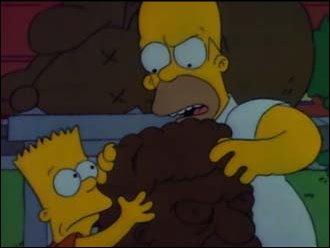
The second act is where the episode changes from a classic era episode to a more Scully and Jean era romp. With Bart and Homer going to find civilization and running into some forest cliches bears/ can't get food etc. But I did enjoy the Swartzweldian stlye gag of the squirrel launching off the tree. But the act just seems to Scully esque with the episodes extreme concetration on Homer and Bart's misadventure and the icing on the cake is of course when they lose their clothing a cheesy sitcom staple. Homer is then identified as big foot. But the family gets reunited at last.

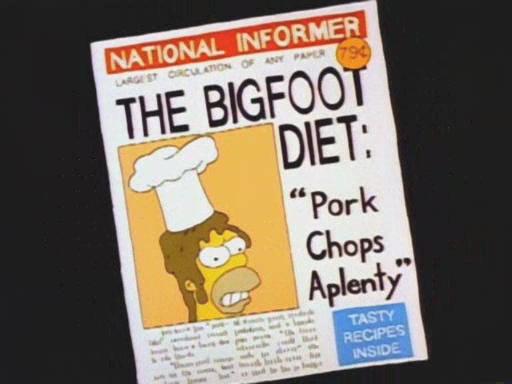
The third act although some decent satire with the big foot special and the media surrounding it a la Radio Bart and Homer Badman it's just too cartoony to be considered a real piece of Simpsons satire. It also seemed very Jean era Simpsons when they had to spell out that he was not big foot and included a obvious joke "below average intelligence man, or a brilliant beast" get it it's because Homer is very oafish and portrayed as the anti intellectual in some parts of the series. It's a real shame Swartzwelder wrote this one because if he hadn't he would've had a really good season one with Life on the Fast Lane/ Bart the General and Crepes of Wrath.

Overall Grade: C+

Moaning Lisa

Moaning Lisa is Al and Mike's second episode of the season and it's a far superior outing than that of "There's No Disgrace Like Home". It is the foundation for the Lisa episodes that would become some of my personal favourites in the classic era. This Lisa is of course pre-Lisa the Vegetarian and she is the voice of morality in the show without being completely cartoony and lazy about it. Like many Lisa episodes to occur in the classic era it is not laugh out loud gag a second but rather a more subtle style of humour. The humour is shown in the Punch out parody in the b-plot and the sharp juxtaposition between Homer's degradation via his obsession of a child's video game and Lisa's want to do anything to progress and mature.

Lisa's plot is one that is that is down to earth realistic and touching at the end. She starts out by not wanting to do her typical routine of boring musical numbers in band and playing rudimentary sports in gym class. Lisa is constantly hit by "mature" figures in a way that is unsympathetic to her sadness. Mr. Largo stiffles her in band by not allowing her to play creative pieces in the class and the gym teacher can't grasp the concept of her not wanting to play dodge ball and sends a note home with her. Homer being the parent that he is is fully concentrated on his child like video game feud with Bart and says she can't play her saxophone loud. But her blues does get momentarily taken away when she hears the saxophone playing of Bleeding Gums Murphy and goes to jam with him. The scene and episode is directed by Wes Archer (and I would've liked to think this was his first episode although he did Homer's Odyssey) and it really looks spectacular. But her jam is interrupted by Marge who soon jerks her back to reality and the fact that it will be a long time before she's matured etc. Marge of course gives her some advice based on the fact she might be seen as a bad mother but upon seeing the advice being used negatively against Lisa by Mr. Largo(again) promptly says the family will be behind Lisa 100% until she gets better.

The b-plot is the main source of comedy in this episode. Bart beats Homer at a game Bart has played hundreds of times. But Homer feels inadequate being beaten by Bart and decides he must beat Bart at all costs. So while Lisa is trying to find her place in the world and mature in a place where she seems so out of place. Homer is regressing down the maturity level by hiring a kid to train him to beat Bart at a game designed for Bart. There is many funny moments with Homer at the arcade etc.

But the truly great aspect of this episode is when the two plots come crashing together. Just as Homer is about to defeat Bart(after much wasted money and time) and complete his full regression to childhood and defeat Bart. Marge unplugs the video game as they were ignoring Lisa/Marge like usual. Then she announces that the family will be going with Lisa to a jazz club. The ending is quite touching in that the family finally understands Lisa and will do everything they can do to make her feel good. Despite the fact that she wants to go a Jazz Hole a place that is out of the social norm and is a fitting way to end an episode based around a character that would become the shows voice for morality and defying social normality.

Overall Grade: A-

Bart the General

Bart the General is arguably the best Simpsons episode of the first season(although season one is full of classic gems). It's the first written by Mr. Swartzwelder and is a "classic Swartzwelder". While Simpsons Roasting was the foundation for emotional/comedic/satire mix and Bart the Genius was the first great character study Bart the General is the first gag fest mixed with some social satire. Anyone who says that the first season isn't funny need only watch this episode and eat some crow as this is almost as funny as any Simpsons episode is.

The first act begins with a classic Bart and Lisa moment with the bus ride with Bart begging for a cupcake and Bart finally getting a cupcake after some funny dialogue although of course it had hit the ground first. What happens next is of course where the episodes conflict comes full out as a Bully attempts to steal Lisa's cupcakes. The bully is successful is ruining the cupcakes and Bart leaps to defend his sister and while he does defeat the weakest bully he is soon face to face with the playground tyrant known as Nelson Muntz. The episode soon makes a clever mockery of playground "constitutions and antics" as of course Bart must fully defend his sister against anybody and must fight Nelson despite his obvius physical disadvantage as he doesn't want to be seen as weak. Of course Nelson must fight Bart back after Bart makes him bleed his own blood. The first act ends with Bart getting thrown in a trash can and rolled to his house.

The second act begins with Bart getting advice from Homer to fight Nelson. Of courseit would have been much smarter to have gone to Marge for advice as she is the voice of reason and pacification. But as Homer states "I don't get in your way when your helping Lisa" the comment in itself a satire of masculinity. So Homer trains Bart and he loses the fight again as Homer being the parent he is didn't help the problem but is rather a statement of the want of masculinity in common America and decides to fight fire with fire. But Bart is much smaller than Nelson and of courses gets defeated. During the fight there is a great Star Wars reference(one of the best of the series).

During the third act Bart goes to the final member of the Simpsons male side of the family tree and that is Grandpa Simpson. Once again there is no realistic reason for Bart to go to Grandpa other than he and Lisa see him as a strong figure because he is old and experienced making him "tough". But the fact they're trying to find the toughest Simpson to defeat Nelson is a biting satire of the way most countries handle their problems etc. So Bart enlists Grandpa to help him and in turn they go to see Herman for some help. Herman gets Bart to rally every person harmed by Nelsons tyrannical reign of the playground to overthrow him. Of course there is some nods to some great movies ie Full Metal Jacket. But the real scathing satire is shown in the episodes parody of the film Patton in the infamous slapping scene and Bart being forced to apologize to the kid he slaps even though the kid could be just as easily as harmed in the fight against Nelson.

The end of the episode is really where the episode is a great satire on war with the two weaker bullies abandoning their leader once it gets hard and say the infamous lines "we were just following orders". The people overthrow Nelson and in one last piece of satire a treaty is drawn up one much like the Germans were forced to sign at the end of WWI.

So I do think that this episode is the one that sets the bar for where episodes were going to go because as much as I love character study episodes and emotional episodes most of the Simpsons episodes will be like Bart the General a great piece of satire in comparing playground antics to warfare and a hilarious gag fest filled with dream sequences and thought bubbles that the Simpsons would be famous for.

Overall grade: A and overall number 27 on my list of top Simpsons episodes

There's No Disgrace Like Home

This is the first episode of 3 written by Al Jean & Mike Reiss in season 1 and it definately is their worst. This episode borders in with Homer's Night Out as being just overtly sitcommy and cliche ridden.

The first act's first few lines disregarding the fight over who loves Homer more are just cringe wirthy. With the dialogue seeming to be striped right out of an 80's sitcom "Don't embarrass me at the company picnic". Those lines are so cliche as is the whole prospect of "the company picnic". This episode just seems to me to be a concept the Simpsons would lampoon in later seasons. The one redeemiong quality of the first act is the interactions between Burns and Smithers. This episode really set the tone for where their relationship was to go and the quick joke about the TV watching the kids isn't bad.

The second act is where the episode gets the most un Simpsons like in that every character is broken down and all resemble one another. There's is no features of any of them that make this episode interesting in the slightest and the 2nd act is rather dull in that it's just them looking through houses and every result is the same they're not a normal family and although some of the results could be viewed as comedic they fall flat because of the poor characterizations presented within the second act.

The third act if any thing with the trip to the therapy center is funny. I used to find the scene hysterically funny but over time my fondness of it has dropped tremendously. The characters in the act are all still mirrors of each other and that doesn't ever change in the episode. The shock scene is the most memorable of this but it too falls to the abnormal characterizations presented in this episode because every Simpsons family member is viewed as somewhat stupid when we know they all had qualities of intelligence. The ending is nice though with therm buying the new TV.

This episode hits the territory of Homer's Odyssey in that the characters are so out of character and people try to defend it by claiming the writers didn't have a firm grasp on the shows characters and boundaries. But there are many episodes in season 1 that disproves that.

Grade: C+

Homer's Odyssey

This episode is pretty much hated by every devoted Simpsons fan and I agree for the most part. I mean it is the second worst episode of season 1 and one of the worst of the classic era. But that being said there are a bunch of episodes I would rank lower than it in The Simpsons cannon.

Anyways getting onto the actual episode. I do feel that the first act of this episode is really well done especially for what was supposed to be the pilot episode. There's some hilarious gags with Otto's shortcut and the trip at the Power Plant. It does set up for some great satire that could've taken place with the whole lower class person losing his job and how they're treated by their neighbours/government institutions and your own family. But it takes a sharp detour in the second act with Homer's out of character attempted suicide. I do find some of the jokes revolving around Homer's suicide funy eith the boulder being at the bridge etc. But the resolution to the suicide is sort of lazy in my opinion and lacks the ummph of most season 1 conflicts in that Homer starts making signs etc.

This episode is definitely the first showcase between the powerful and menacing Burns and the common man often in the form of the oafish Homer. But of course it is rather weak in terms of the conflict and resolution in that we know Homer must return to the status quo and abandons his fellow campaigners and takes a new job at the SNPP proving Mr.Burns the winner(sort of) in this one.

I do find it weird that they were able to handle Bart's character in such an amazing was in Bart the Genius and Lisa in Moaning Lisa and Marge in Life on the Fast Lane but left Homer so out of character in this one. I do not think that the reasoning that it's just too early to firmly establish characterization is a good excuse just because they obviously knew how to write for the family in season 1


BLACK SMITHERS!

Grade: C+